The Shore Journal
Reading for the Road Back
Honest, unhurried writing on addiction, recovery and the traditions of healing we practise — for guests, families, and anyone quietly searching.
The Shore Journal · Kerala Ayurveda · 6 min read
Why Kerala Is Where the World Comes to Heal
For over three thousand years, the southwest coast of India has practised a medicine of patience. Kerala's Ayurveda is not the spa-menu version exported to hotel brochures — it is a complete clinical tradition, taught through generations, in which the body is understood as something to be rebalanced rather than silenced.
This matters profoundly in addiction recovery. Substances hijack the body's own chemistry; abrupt medical suppression often just relocates the problem. The Kerala approach — therapeutic oil treatments like Uzhichil, herbal protocols, food as medicine, and daily rhythm — works alongside modern psychiatry to rebuild the body's own regulation. At The Shore, a guest's morning may begin with traditional Uzhichil and end with an evidence-based therapy session; neither replaces the other, and both are supervised by qualified clinicians.
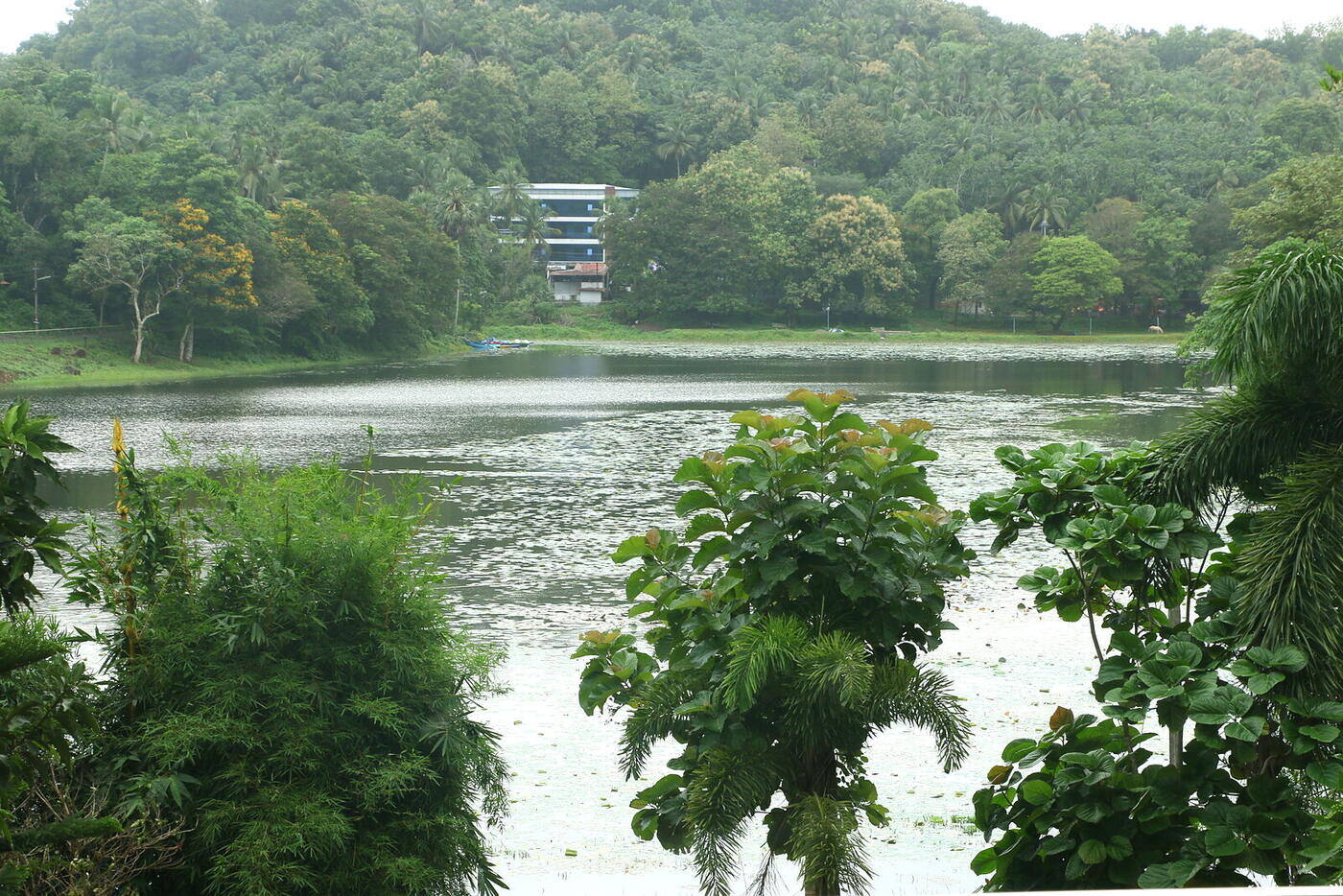
The setting is not decoration either. The deep green folds of the Western Ghats — among the world's oldest mountain ranges — hold a quiet that city treatment centres cannot manufacture. Research on nature-based recovery keeps confirming what Kerala's healers assumed all along: the nervous system heals faster where the world is slower. That is the Kerala advantage. Not tradition instead of science — tradition, finally, with science.
Medically reviewed by the multidisciplinary clinical team of The Shore Wellness.
The Shore Journal · Digital Wellness · 5 min read
Digital Detox: The Addiction Nobody Names at Dinner
No one hides a phone in a desk drawer the way they hide a bottle. It sits openly on every table — which is precisely why compulsive digital use has become the most socially invisible dependency of our time. The executive who answers messages at 2 a.m., the teenager who panics without Wi-Fi, the parent who has not had an unbroken conversation in years: these are not character flaws. They are conditioned reward loops, engineered by some of the most sophisticated attention machinery ever built.
A true digital detox is not a weekend without Instagram. It is a structured unplugging — replacing the loop with things the loop crowded out: sleep that completes its cycles, meals eaten as meals, boredom that resolves into thought, conversation that resolves into connection. At The Shore, digital detox guests follow a personalised programme of yoga, nature therapy, counselling and Ayurvedic treatment on an estate where the loudest notification is rain on the dam.
The goal is not to demonise technology — guests return to their devices. The goal is to return as the user, not the used.
Medically reviewed by the multidisciplinary clinical team of The Shore Wellness.
The Shore Journal · For Families · 5 min read
The Family Heals Too: What Bystanders of Addiction Deserve
Ask anyone who has loved a person through addiction and they will describe a strange double life: managing crises by night, keeping up appearances by day, becoming an accidental expert in hiding things. Families are addiction's second patients — and almost no treatment system treats them.
The evidence is blunt: recovery outcomes improve dramatically when the family system heals alongside the individual. Trust must be rebuilt in both directions. Children need language for what they witnessed. Partners need to learn where compassion ends and enabling begins. Parents need to put down blame they were never meant to carry.
This is why The Shore was designed with family suites, caregiver Ayurveda, and dedicated child, adult and elder counselling. When a guest completes their journey here, they do not return to the same fragile ecosystem that surrounded the addiction — they return to a family that has done its own work, in its own right. Recovery that continues at home begins with a home that recovered.
Medically reviewed by the multidisciplinary clinical team of The Shore Wellness.
The Shore Journal · Choosing Treatment · 7 min read
How to Choose a Rehab Centre in Kerala: A Family's Guide
Searching for a rehab in Kerala usually starts at 2 a.m., after a bad night, with a phone and a search bar. It is one of the most consequential decisions a family will make, and almost no one has done it before. Here is what actually separates a serious de-addiction centre from a nicely photographed one.
Medical staffing, not just wellness staffing. Ask directly: is there a psychiatrist on the clinical team, and is medical detox supervised round the clock? A centre built around yoga and Ayurveda alone, with medicine as an afterthought, is not equipped for the withdrawal complications that alcohol and certain drugs can cause. At The Shore, allopathic medicine and Kerala Ayurveda run alongside each other from day one, under one clinical plan.
Capacity, not just capacity to advertise. A facility with sixty beds cannot give sixty guests a personal treatment plan. We deliberately limit The Shore to seven suites — enough for a real team-to-guest ratio, not enough to become a hostel with a garden.
Family involvement, structured — not incidental. Recovery that ends at discharge tends not to last. Ask whether the centre has a real family programme, not a single visiting day. Ours is detailed on our page for families and bystanders.
Honesty about outcomes and confidentiality. Be wary of any centre promising guaranteed cures or advertising "5-star" ratings it cannot verify. Ask instead about their confidentiality protocol, their aftercare structure, and what a typical admission process looks like — a serious centre will answer plainly, without pressure tactics.
Kerala has a genuine, centuries-deep advantage in this field — but the tradition is only half the equation. The other half is clinical rigour. Choose a centre with both.
Medically reviewed by the multidisciplinary clinical team of The Shore Wellness.
The Shore Journal · De-Addiction in India · 7 min read
What World-Class De-Addiction Treatment Actually Looks Like
"De-addiction treatment in India" returns thousands of results, and most describe the same thing: a detox period, a stay of some length, and a discharge. That is the minimum, not the standard. Real, world-class de-addiction care rests on a few non-negotiables.
A multidisciplinary team, working as one. Not a psychiatrist here and an Ayurveda doctor there, each unaware of the other's plan — but a single case conference, a shared file, and daily coordination between medicine, psychology, Ayurveda and counselling. That is how we run clinical care at The Shore: one treatment journey, several disciplines contributing to it.
Individualised, not templated, treatment. Alcohol dependency, opioid dependency, behavioural addictions and co-occurring mental health conditions each demand a different protocol. A guest arriving with depression alongside a substance use disorder needs both treated together, not one after the other.
A plan for after, decided before. The best predictor of lasting recovery is not the quality of the first thirty days — it is what is in place for the months afterward. Serious centres build a discharge and aftercare plan into the admission itself, not as an afterthought at checkout.
Dignity as clinical policy, not marketing language. Guests should never feel reduced to a diagnosis. This is the value our founder's father, Dr. Johns K Mangalam, built his life's work on at Punarjjany — and the standard we hold ourselves to at The Shore, detailed in our founder's story.
If a centre cannot describe its medical protocol, its staff qualifications and its aftercare plan clearly and specifically, that absence is itself the answer.
Medically reviewed by the multidisciplinary clinical team of The Shore Wellness.
The Shore Journal · For NRI Families · 6 min read
Bringing a Loved One Home: An NRI's Guide to Treatment in India
Coordinating treatment from another country adds a layer most guides do not address: time zones, trust built entirely over a screen, and the logistics of getting someone home safely and admitted with dignity. NRI families ask us the same handful of questions, so we answer them here.
Can we speak to someone before committing to anything? Yes — and you should insist on it wherever you look. We offer free video consultations across time zones, over Zoom, Google Meet or WhatsApp Video, before any admission decision is made.
Who manages the logistics — us, or them? A family already managing a crisis from abroad should not also be managing airport transfers and paperwork alone. Our NRI desk coordinates pickup from Kochi and Coimbatore airports and full admission logistics — reachable directly through our NRI & Global page.
Can a family member stay on campus? Distance often means guilt about not being present. Where a guest and clinical team agree it helps recovery, family can stay on the estate — details are on our page for families.
What happens after the flight home? Aftercare does not have to end at the airport. We maintain structured follow-up by video call, and can coordinate with a treating psychiatrist in the guest's home country where useful.
Treating addiction from a distance is harder, not impossible. The right centre closes that distance for you, not the other way around.
Medically reviewed by the multidisciplinary clinical team of The Shore Wellness.
The Shore Journal · Aftercare & Relapse Prevention · 6 min read
Relapse Prevention: What Happens After You Leave Rehab
The hardest part of recovery is rarely the stay itself — it is the Tuesday afternoon, four months later, when the old triggers reappear and the structure of treatment is gone. Relapse prevention is not a pamphlet handed out at discharge. It is a plan, built with the guest, for a life that no longer needs the old one.
Identify the actual triggers, not the generic ones. Stress, a particular relationship, a city, an anniversary — real relapse prevention names the guest's specific pattern, not a textbook list.
Build the replacement, not just the restriction. Telling someone what to avoid is easier than giving them something to move toward. Our discharge planning focuses as much on rebuilt routine, purpose and relationships as on avoidance.
Keep the family in the loop, with consent. Isolation is relapse's favourite condition. Families who understand what to watch for — without becoming the addiction police — are one of the strongest protective factors we see, which is why our family programme continues past discharge.
Make follow-up easy to say yes to. A single follow-up call three weeks after discharge, at a moment of wavering, has changed outcomes for guests we have treated. We build structured check-ins into every discharge plan, and guests can always reach us confidentially through our admissions team.
Recovery is not a finish line at the end of a stay. It is a system that keeps working long after the stay ends — and building that system is as much our job as the treatment itself.
Medically reviewed by the multidisciplinary clinical team of The Shore Wellness.